
by admin | Apr 12, 2019 | Legal Matters Discussed, Real Estate Law
Most landlords and owners do not allow smoking in their rental units – and for good reason: the smell remains in the house long after the tenants move out; the tar and smoke buildup on walls, carpets, and ceiling; and it increases the risk of accidental fire to your rental home.
But what about vaping and e-cigarettes? Should you allow their use in your rental? Recent polls indicate 10% of U.S. adults and 15% of U.S. adults under the age of 40 use e-cigarettes. This equates to millions of users throughout the country, so allowing the use of e-cigarettes might spark more interest in your rental properties from that growing population.
Risks of Vaping and E-Cigarettes to Your Rentals
Before you sign up those vaping tenants, you should be aware of the risks of vaping and e-cigarettes to your rentals.
http://time.com/3915957/e-cigarettes-vaping-health-tobacco-addiction/ (hyperlink 10% of U.S. adults with this).
That Chain-Smoker Perfume
Just like traditional cigarettes, cigars, and pipes, e-cigarettes do produce emissions that leave behind a residue that can build up on walls, ceilings, and in vents over time. The vapors from e-cigarettes are significantly cleaner than those from traditional cigarettes, but it will still leave an oily residue with repeated and long-term use. While the stench and deep staining of nicotine are not as prevalent with e-cigarettes, it is likely there will be extra cleaning costs upon your vaping tenant’s move-out.
Fire Hazards
While e-cigarettes have a significantly smaller chance of burning down your unit than falling asleep on the couch with a lit cigarette, the danger is still real. In July 2017, FEMA issued a report that 195 separate incidents of explosion and fire were reported involving e-cigarettes in the preceding 8 years. Many of these explosions occurred when the e-cigarette was being charged. Often this charging is done when tenants are asleep and not in a position to realize the danger before significant damage is done to your unit.
https://www.usfa.fema.gov/downloads/pdf/publications/electronic_cigarettes.pdf (hyperlink FEMA with this).
What to Do?
Ultimately it will be up to each landlord to allow or exclude the use of e-cigarettes in its properties. However, whatever you decide, you need to be sure your lease is updated to address e-cigarettes and vaping, and to ensure your tenants are aware of the rules regarding vaping and smoking before you rent to them.

by Christopher Clark | Mar 21, 2019 | Employment Law
Generally speaking, an employer must pay its employees for the work that they perform. This is true whether you are paid hourly, salary, commissions, or by the piece, or any other method for determining the amount. In Indiana, these wages must be paid either twice a month (semi-monthly) or every two weeks (bi-weekly). Failure to pay wages earned can result in penalties for the employer up to two times the amount of unpaid wages, plus attorney’s fees.
In Indiana, if you are an hourly employee with an agreed upon wage, your employer is obligated to pay you for the hours you work within ten (10) days of the payment period end. For overtime, an Indiana employee is entitled to 1.5 times his or her hourly rate for any of the hours worked past a 40 hour work-week. If an employer does not make these payments, an individual may have what is known as a wage and hour claim.
Indiana has two statutes, the Wage Claims Statute, Indiana Code §22-2-9, and the Wage Payment Statute, Indiana Code §22-2-5. The Wage Claims Statute is for employees that have either been terminated or are in a labor organization dispute. Individuals with a claim under the Wage Claims Statute, that is in excess of $6,000 must get approval from the Indiana Department of Labor to file a private suit against their employer. For claims between $30 and $6,000, the Indiana Department of Labor will collect your wages free of charge. If you have a claim for unpaid wages that is less than $6,000 a claim can be made by filling out the IDOL’s Online Wage Claim Form: https://www.in.gov/dol/2671.htm
The Wage Payment Statute is for employees who have voluntarily left employment or are still currently employed.
Under both Indiana statutes, an employee is entitled to liquidated damages ranging from 10% to no more than double the amount of wages due and reasonable attorney’s fees. These damages are in addition to the wages owed. These statutes are designed to pay individuals what they are due. Immigration status does not matter, and it is illegal for an employer to use immigration status as a justification for not paying wages.
The Indiana Supreme Court reiterated the importance of Indiana’s Wage and Hour laws and their importance for all workers who depend on their paychecks to be paid regularly.
“I write separately to observe that the facts of this case dramatize the point that the statute confers on all employees the right to recover treble damages and attorney’s fees for failure to pay wages, regardless of the employees’ circumstances. This is perfectly understandable as applied to the vast majority of workers who are dependent on their paychecks for their day-to-day expenses. These employees need the money currently, not at the end of protracted litigation, and often do not have the economic staying power to engage in a court battle over relatively small amounts. A statute providing one party with treble damages and attorney’s fees is a very substantial deterrent to an employer’s playing fast and loose with wage obligations. As applied to claims of most workers this is very understandable legislative policy.”
St. Vincent Hosp. & Health Care Ctr., Inc. v. Steele, 766 N.E.2d 699, 706 (Ind. 2002).
If you have worked, but not been paid, please contact the employment attorneys at Goodin Abernathy, LLP to determine if you have a wage and hour claim. Your time and effort is valuable – talk to us to determine your options for recovering your hard earned wages.

by admin | Feb 28, 2019 | Discrimination, Employment Law, Free Consultations, Legal Matters Discussed, News Around Indy
In the next five years, approximately 25% of our workforce will be 55 years or older. For some people like Bruce Arians, a former Colts NFL football coach, jobs are still opening up. But how are things going for the rest of our older workers? Are you an older professional that was just fired or handed a severance package?
Demographics show a large portion of the Baby Boomer generation is still working. Whether its because they need to work or because they want to work, many 50+ year olds are not retiring. Theoretically, our federal law protects employment discrimination against workers 40 years of age and older. The law is known as the Age Discrimination in Employment Act, or the “ADEA”. But not all employers follow the law, and it’s much tougher for older workers to find new jobs – let alone financially recover from an unexpected severance.
In Indianapolis, our attorneys see this scenario commonly unfold in the medical industry. Goodin Abernathy LLP attorneys are experienced with pharmaceutical and medical device representatives suddenly facing a “forced retirement.” Typical scenarios show the experienced reps are asked to train new, younger sales people. The trainees tag along, meet the customers and learn the ropes. Then, if they aren’t fired, the older rep’s territory just gets split up. Part of the territory is assigned to the younger worker, while the older rep’s compensation package does not change. This means the experienced worker just trained themselves into a pay cut. You can imagine what happens after a little more time when the younger worker learns the ropes: they’re handed both territories and the older worker is shown the door.
Other times the older, experienced worker gets pushed out or “harassed out” of their position. Their younger managers start building flimsy records of statistical violations. They say the older worker isn’t making enough sales calls; is not attending enough meetings; fails to use the company’s technology correctly, etc.
Behind the scenes, the company’s strategy is simple: replace the higher paid, experienced worker with cheaper labor offered by young workers. The older workers – who devoted their careers to improving the company’s interests – get cut loose by new or younger managers trying to make their own numbers look better.
Another typical scheme involves luring away experienced, older workers from competitors. After the older worker shares her book of business and discloses other proprietary information, the new company abruptly lets them go. The new company just wanted the work intel for its younger reps and never really planned to keep the new, older hire on board.
When companies plug younger workers into jobs and push out 40+ year old workers, the experienced workers should contact our Goodin Abernathy LLP attorneys for an ADEA evaluation.
Contact Goodin Abernathy LLP, and we will tell you how to look for signs of illegal ageism or age discrimination. Consult us and we will explain the legal process for an ADEA or EEOC claim with an eye towards enforcing your legal rights.

by admin | Feb 23, 2019 | Construction Injury Claim, Legal Matters Discussed, Personal Injury, Worker's Comp
CONSTRUCTION ACCIDENTS
If you or someone you know was injured while working at a construction site, there are typically two areas of law that we use to make your claim.
The FIRST is a worker’s compensation claim. This area of law is for employee claims against their own employers. The law requires the employer to offer these basic benefits:
1) Pay all medical treatment- including the ambulance, hospitals, doctors, physical therapy, medicine and x-rays.
2) Lost Income- if you miss more than 7 days of work in a row, the employer must pay you 66% of your average income. This is called TTD or Temporary Total Disability. These payments can extend if you return to restricted or less hours.
3) PPI- Permanent Partial Impairment- When the doctor says you are finished treating, she or he needs to write a report explaining if your injury caused a long term impairment that affects your ability to work.
The SECOND type of legal claim is for NEGLIGENCE against the general construction company. Unfortunately, a lot of times this legal claim is overlooked and the worker misses out on additional recovery.
So don’t let that happen to you. Share your information and we’ll investigate whether we can help you.
For instance, written construction contracts or legal relationships between the construction firms can require the general contractor to protect your safety.
A negligence claim against the general contractor can help you recover more than the limited benefits allowed by a work comp claim. This can be a VERY important part of your financial recovery.
Take a look at more information about these claims on our website OR just call me, Jim Browne at Goodin Abernathy.
For something really easy, just click the “Do I have a case” button and we’ll look at the specifics of your case.
Goodin Abernathy wants to help – and we’ll put our experience to work for you.
by admin | Feb 11, 2019 | Slip / Fall Injury, Worker's Comp
Video Surveillance & Indiana Worker’s Compensation Cases
What does the law say about video surveillance in Indiana Worker’s Compensation cases? Glad you asked – because the Goodin Abernathy LLP law firm handles those claims.
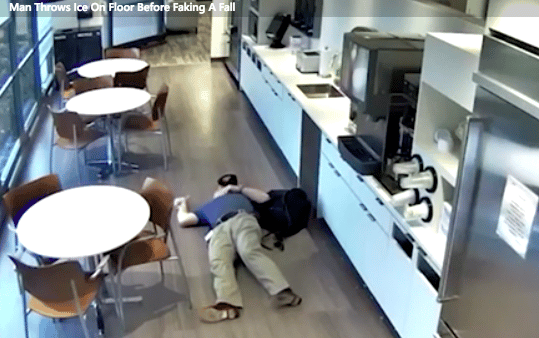
This video of a man, who seemingly fakes a fall and injury, is making the internet rounds.
The video shows a man create his own water hazard and intentionally fall in it. When it comes to liability, Indiana’s worker’s compensation law favors workers – but this claim would probably “fall flat” in court.
So let’s look at two main points raised by the video:
1) How is liability handled in an Indiana Worker’s Compensation (“work comp”) claim?
2) Can the employer use video evidence?
A good part about Indiana’s work comp law is that an employer must accept a claim for accident and injury if an employee is hurt on the job. The employer cannot avoid responsibility and argue the employee is at fault for doing something wrong to cause the accident. This is a big difference from Indiana’s negligence law, where private individuals or businesses are suing each other. In a negligence case, a defendant can argue the plaintiff was more liable or “at fault” for causing the accident. If they prove it, the plaintiff can lose their whole case.
But not in an Indiana Worker’s Compensation case. As long as the accident occurred at work or in the scope of the employment, the employer must cover the claim.
There are a few exceptions. If the worker: intentionally caused the injury (watch that video again); was injured doing something criminal; or was under the influence of alcohol, drugs or intoxicants – then an employer can try to deny the claim.
On numerous occasions, we have represented injured clients against their employer’s intoxication defense. Usually these situations involve chemical test results showing traces of medicine, drugs or alcohol in the employee’s system. The employer must show, at the time of the accident, the intoxicants impaired the worker’s physical and mental abilities. That’s when you turn to the actual levels of intoxicants in the blood stream.
What if the worker consumed the substance days before the incident. While we do not condone it, what if the worker smoked marijuana the weekend before their accident? Calculations can be made to determine whether the substance actually affected the employee when the accident occurred. In some very serious injuries, that we won, we’ve proven our clients were not under the influence of drugs – even though traces showed up in their system.
Finally, YES, videos can be used in court. One reason could be for liability issues like the video that started this blog. Another reason could be to question our client’s credibility in a case where they claim permanent physical disability prevents them from working. An employer or its insurance company may have surveillance done, where a private investigator secretly follows the worker around, taking video of regular activities like driving, carrying groceries, fishing or cutting their lawn.
The Goodin Abernathy attorneys are very familiar with handling this evidence and give clients advice on how to conduct themselves, what to watch for and how to counter punch the private investigator’s assertions.
Indiana’s work comp law is well intentioned. It is designed with the thought an injured worker can represent herself in court without an attorney. But remember this: employers use sophisticated, trained insurance companies to defend the claims. Those insurance companies make money collecting premiums – not paying money towards injury claims. That’s why you should contact Goodin Abernathy LLP for advice on how to handle your Indiana Worker’s Compensation claim.
by Jim Browne | Feb 1, 2019 | Discrimination, Employment Law, Free Consultations, Legal Matters Discussed
What happens to whistleblowers and workers facing discrimination in the work place? Tricia Newbold, a dwarf, claims the White House is freezing her out of a job (see article here).
This story reminds me of one of the best cases, and clients, we’ve helped over the years. It involves an American with Disabilities Act claim and the Equal Employment Opportunity Commission (“EEOC”) – legal areas which Goodin Abernathy LLP is experienced in, litigating cases with earnest to represent our clients.
Our client, “B”, is an Achondroplasia Dwarf. Outside of being a dwarf, B had normal dreams and aspirations like the rest of us had at a young age. B came to us because while she was working at a major restaurant chain, a manager and co-workers discriminated against her. They held her back from a job promotion and occasionally made disparaging remarks about her physical stature. They thought it was funny – but the remarks were mean to B.
B started as a hostess and wanted to get promoted to serving tables. Waitresses made more than those in the hostess position. Although the position required different physical requirements, B was up for the challenge.
The problem was, the restaurant outright denied her requests to be a server. On top of it, they were callous about it. The employer did not take time to consider what our laws say about equal opportunity for all workers. And probably worse yet, they did not take the time to consider the moral issues involved with the situation.
The Americans with Disabilities Act (“ADA”) and its 2008 update, the ADA Amendments Act (“ADAAA”), provide legal protection for disabled workers in our country. Goodin Abernathy LLP submitted a Charge of Discrimination for B with the local EEOC office. When the EEOC gave us a “Right to Sue” letter, we filed a legal complaint against the employer in Federal Court.
We collected evidence in B’s case, showing the employer failed to reasonably communicate with her about the server’s position. Nor did they consider whether reasonable accommodations would have easily allowed B to perform the server’s job. On top of that, our investigation revealed the rude comments by staff and B’s supervisors.
The company’s attorneys fought and complained, but we did not give up. We did not expect a lot. We did not expect for B to retire on the case – but we did expect to win. B recovered financial compensation allowed under the law. And, we won, because as attorneys, we used the law and fought for somebody’s equal rights.
Contact attorney Chip Clark at Goodin Abernathy, LLP with any ADA or EEOC questions you have. Give us a chance to partner with you – fighting for the legal rights you morally deserve.
by admin | Dec 12, 2017 | Auto Accidents, Legal Matters Discussed, Personal Injury, Safety
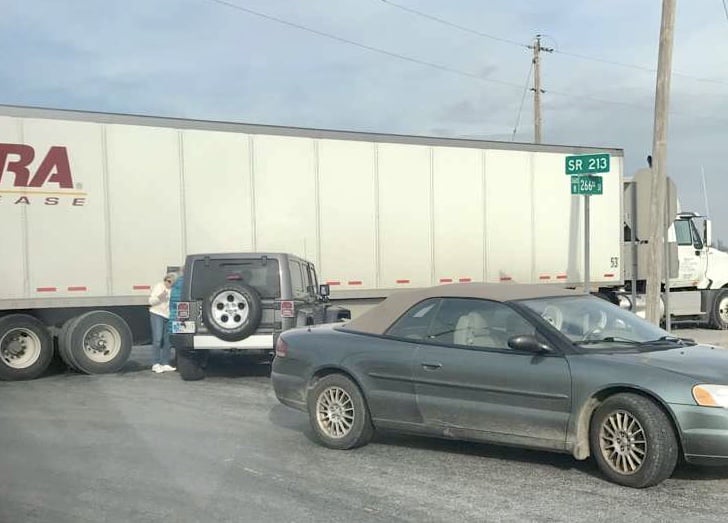
Tis’ the season to be… CAUTIOUS! Well on the road that is. Not only does the weather get worse every holiday season around here, but also, many individuals think that it is okay to drink alcoholic beverages before getting on the road. Combine those two and you are practically guaranteed to see or worse experience an accident yourself!
Don’t Break the Law By Drinking and Driving
Beyond already breaking the law, there are some other consequences that people don’t think of till after they get in an accident. Such as, after their treatment at a hospital for drunk driving, the individual will learn that their vehicle has been impounded. That for sure will be more than a pretty penny to get it out of there, we can guarantee you that. There may also be additional charges if the accident caused property damage or injured someone. Then if attorneys, like us, get involved, the intoxicated driver will also have to pay for those property damages and medical bills of the injured.
That being said, it is better to prevent accidents before you start traveling during this holiday season. Believe it or not, the majority of car accidents occur close to the driver’s own homes. This is because individuals typically get over-confident when they’re almost home and think that they know their roads like the back of their hand. This makes them less observant than they normally would be. But let’s be honest, could anyone really describe every detail of their hand without looking at it?
Safety Tips for Your Holiday Travel
It is important to plan carefully before heading to a holiday event this season. Use these recommended safety tips to protect you and your family from an injury this holiday season.
Safety Tip 1: Maintain Your Vehicle
Make sure your vehicle is in good working condition during the winter by having a professional tune-up. Check your tires. If the tread is worn, have them replaced. Before you leave home, verify that you have enough fuel in the vehicle to cope with any detours that you might need to take.
Safety Tip 2: Understand Your Route
We know a lot of you rely on Siri, or your phone in general, to be able to get around anywhere. This is completely understandable but instead of plugging it in and going, try taking a few seconds before heading out to really understand how you are actually getting to your destination. By understanding your route, it will help prevent you from getting lost and allow you to focus on the road rather than your device.
Safety Tip 3: Plan For Extra Travel Time
Sometimes your map’s feature “estimated arrival time” can be a bit off. This is especially true during the holiday season. The roads are typically busier than normal, you never know when an accident may cause a huge traffic jam, and it is even more difficult to find a place to park.
So try leaving 10-15 minutes earlier than you normally would to avoid being late to your holiday events this season. But if you are a bit unlucky on the road and running a bit behind, remember it is better to arrive late at an event than driving too fast, getting in an accident, and instead arriving in the hospital.
Safety Tip 4: Use Your Safety Equipment
Holiday joy and excitement is in the air, which sometimes leads to you forgetting the small things. So make sure to turn on your vehicle’s headlights before dusk, so that other drivers can see you on the road. Keep warm clothes in the car in case of an emergency, and do the same for your passengers. A safe car is a happy car.
Safety Tip 5: Have a Designated Driver
When you travel to a holiday party with a group of friends, have a designated driver who won’t drink any alcoholic beverages. With this safety tip, you will have a sober individual to drive you home from the holiday event to avoid any accidents and get you home safely.
Safety Tip 6: Have a Plan B
Sometimes your Designated Driver forgets they are supposed to be the designated driver. In that event, have a Plan B for an alternate SOBER transportation. Today, it is easy to use a smartphone to contact a Lyft or Uber driver nearby and to take you and your friends home. Plus if you’re riding with others, share the costs through those apps, or others, like Venmo.
Safety Tip 6: Focus On the Road
While traveling throughout the holidays, make sure to focus on the road rather than trying to multi-task on your smartphone, talking to passengers, and listening to music. Instead designate a passenger to tell you where to go so that you can watch the road for any impaired drivers potentially swerving into the wrong lanes or those who are driving without any headlights.
Safety Tip 7: Remain Alert For Pedestrians
Remember that more individuals are also walking during the holiday season, so you must remain alert for pedestrians who are walking along the streets, sidewalks, or crossing a designated or undesignated part of the street. Keep in mind, some of these pedestrians may be inebriated and may not make the most sound decisions. Lastly, just because it is winter, does not mean that there are not still some bikers out there. Always keep a lookout for cyclists, and remember, give them 3 feet when you pass.
Call For Assistance
If you are injured in an accident caused by a drunk or impaired driver, contact an attorney right away for a free legal consultation.
by admin | Oct 26, 2017 | Legal Matters Discussed, Personal Injury, Safety, Worker's Comp, Wrongful Death
Knowing how to properly use and maintain ladders while working is life-saving knowledge to have for safety protection against falls at work – and at home. Daily, within the United States, at least two thousand citizens are critically hurt during the use of a ladder. If you add in the occasional slip and fall occurrence, that number goes up considerably. For a hundred of them, long-term disability or possibly even permanent disability can be the end result due to their injuries.
Fall Protection and Training
Fall protection and training will consistently play key roles in keeping your employees safe. Worker’s compensation insurance premiums increase as more employees file claims. Falls happen every single day and at least one ladder accident causes a person’s death. At that point, you must ask yourself, “What is the cost to someone when told they are permanently disabled, can never work again or worse.” Loss of income alone can be devastating to a family. Effective January 2017, OSHA established updated employer requirements connected to the performance, design, and utilization of fall protection structures. The update raises consistency between construction standards and the general industry.
The majority of industrial companies’ biggest expenses due to employee injuries deal with ladder-related falls. The financial weight can be astounding. The dreadful human cost is even more shocking. With effort, fall protection and prevention, when it comes to a slip and fall, ladders or aerial access equipment, will most likely be a huge focus the future. Think of this scenario. If you were on the cliff of a mountain, would you rather build a fence around the top of that cliff for safety? On the other hand, would you prefer to station an ambulance at the base of the mountain just in case?
All safety equipment is designed with its potential dangers in mind. During the design process the attempt to eliminate all of those red flags. The designers outline everything in their hierarchy of controls. In layman’s terms, they engineer out the danger. If you do not see a path to engineer the danger out, safeguard against the danger. If guarding against it is not possible, then you must properly warn, supply personal protection equipment and adequately train people on its use and dangers.
Technology of Ladders
Many things over the years have improved thanks to technology. The time has long past to improve the safety of ladders. The primary design of conventional ladders has been untouched for centuries. Therefore, it is no coincidence that the rate of ladder injuries has grown in the past decade. Sadly, a team somewhere reviewed the design and decided that the original blueprint of the ladder could not be enhanced. This is why you will see many warning labels on ladders. These visible warnings force safety professionals to schedule a myriad of training meetings. These meetings teach employees to not do things on a ladder that everyone knows they are going to do anyway.
Stepladders actually present their set of special problems. Falls still happen due to over-reaching. They also have compliance rules pertaining to sustaining three points of contact while in use. You should constantly maintain three points of contact when you ascend and descend on a ladder. For example, there should be a combination of two feet and one hand or two hands and one foot at all times. Now, what should you do once you are no longer in climb mode and begin working? Technically, you are still supposed to have three contact points. Most personnel feel it is difficult to work with just one hand. Tying off above certain height levels is also something recommended. Lastly, what do you do when it comes to working on surfaces that are uneven or over stairs? The debate continues.
Aerial safety cages are another means of reaching heights. They are not actually considered ladders and are not scaffolds or power lifts either. Aerial safety cages permit the operator to perform their work in a completely enclosed space. The unit is a height-adjustable platform that is in compliance with all tie off and guardrail rules. This newer type of access equipment is more adaptable than traditional ladders or powered lifts. Aerial safety cages are capable of adjusting for working on stairs or uneven surfaces. They cages are approved for use surrounding live electrical circuits because they are assembled with non-conductive fiberglass rails.
Protection and prevention against a fall on the job begins with understanding how individuals use ladders. Just as important, there needs to be continued concentration on how people injure themselves using ladders. With continued research in this area, there can be real opportunities to designing new and safer products for climbing. If you are hurt or need worker’s compensation answers, Goodin Abernathy LLP can assist you. Call us for a free consultation if you have been injured on the job.
by admin | Oct 4, 2017 | Legal Matters Discussed, Personal Injury, Safety, Worker's Comp
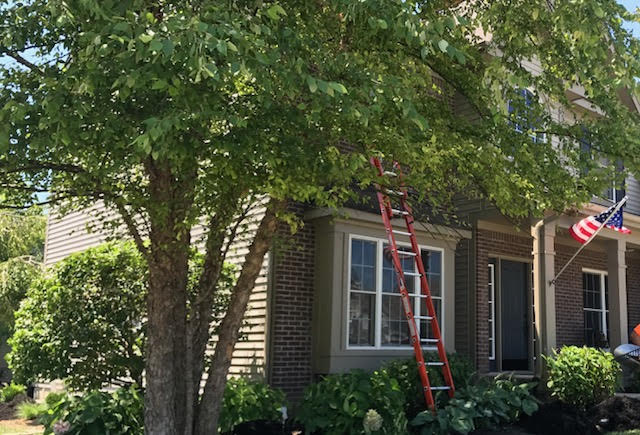
Every year, hundreds of workers wind up hospitalized for a ladder accident due to gross violations of safety protocol; however, there are plenty of isolated accidents that can happen for any number of preventable reasons. Whatever the reason may be for a ladder safety accident, there are a number of things that you should always keep in mind to tell whether or not you might be entitled to work injury compensation.
Ladder Safety
Proper ladder safety begins with having the right ladder. The majority of ladder accidents can be avoided just by making sure that the right kind of ladder has been chosen for the job. However, in many cases, the quality of the ladder being overlooked tends to be one of the major reasons why somebody ends up getting hurt.
Responsible business owners will always make sure that ladders in all areas are consistently examined and inspected to confirm that they are dependable for the workers. In the event that a ladder becomes compromised, fails or breaks while a worker is standing on it due to a failure to properly maintain it, a critical aspect of the case would be just how diligent the employer or management’s efforts were to make sure that said ladder was properly examined and cleared for safe use.
Self-Supporting Ladder Misuse
It isn’t just about the objective quality and safety of the ladder but also its default design issues. Certain ladders are built in a self-supporting design, making them safe to use without necessarily having to propping them up against something larger and supportive. When it comes to ladders that are not self-supporting, however, things can get a little bit complicated. A non-self-supporting ladder can be just as dangerous as an improperly maintained ladder. If it is used at an angle where the distance from its top support to the bottom foot of the ladder is more than a quarter of its working length, it’s crucial to maintain it.
Surface Stability
Even if the ladder is in passable condition and properly used, a concern also involves the stability of the surface it stands on. In order to make sure that a ladder is truly safe to operate, it needs to be confirmed that the surface is properly level, free of debris and overall stable.
There can’t be any unintentional slipping or movement that happens when pressure is put on the ladder of any kind. Even if it doesn’t seem to be that significant at first, a moment of unexpected compromise when there is an actual risk of an injury can prove to be disastrous very quickly.
Employer Supervision Oversights
Just as it is important for an employer to make sure that the state of the ladder is optimized for safety, it is also important for them to make sure that the employees have been properly trained. It is the responsibility of the employer to make sure effective training programs are provided and put in place, so that each employee knows exactly how to use the ladders properly. In addition to confirming that every employee is familiar with the proper safety protocol, consistent regular safety meetings or “tool box talks” are also standard in the construction and painting industry.
In-patient Hospitalization and Multiple Injuries
If you require inpatient hospitalization because of a ladder accident, the employer must file a record of your in-patient hospitalization with the Occupational Safety and Health Administration (OSHA) within 24 hours. If the employer fails to file a record of the inpatient hospitalization, they can very easily be held liable for negligence to follow through with due process. OSHA is also concerned with multiple injuries from single construction accidents.
Negligence Claims
In addition to making an Indiana Worker’s Compensation claim, your accident might also involve a negligence claim against a third party. This means if an accident was caused by a worker from another company or an independent party (someone besides your employer or co-workers), then you might have a legal claim beyond the recoverable benefits from the worker’s compensation law. Our firm handles both negligence and Indiana Worker’s Compensation claims, and we know what to ask about and look for with these cases. (Alprazolam) When we can prosecute injury claims to collect damages beyond those offered through the Indiana Worker’s Compensation law, we go after them and fight for our clients.
Summary
With Indiana workers compensation claims, you can get the justice you need for using the state’s laws for work accidents. The law requires employers to offer benefits covering medical expenses, lost income from time off work (TTD) and permanent partial impairment (PPI) compensation. In order to make sure that your case is as strong as possible, you will want to make sure that you have all of the necessary details in order. Make sure to accurately report the time of the accident, all of the details about the environment, any medical details provided by your primary health care providers and a complete chronological report of the events leading up to and following the accident.
The more details that you can provide about your Indiana workers compensation claim case, the better of a chance you will have to get the kind of work injury compensation that you deserve. If you would like to know more about how you might be able to present a strong worker’s injury case, feel free to get in contact with us for a free consultation.
by admin | Aug 22, 2017 | Employment Law, Legal Matters Discussed
Are you facing an embarrassing issue at work? Is there a problem that might hurt your reputation and even your professional license? Fortunately, we may be able to help.
Even if what happened wasn’t necessarily criminal, it can still damage or destroy your professional reputation. You may face discipline from a professional licensing body, or you may face difficulty securing new employment. The good news is that our professional employment lawyers here in Indianapolis help deserving clients minimize damage and keep their careers in tact.
What Kinds of Offenses Can Tarnish Your Professional Reputation?
There may be a number of different ways that you might get in trouble at work. You may have been caught sexting or watching pornography on the job. There may be issues with sending inappropriate emails on company servers. Even what you do in your personal life might create professional problems.
Perhaps you’ve been accused of stealing from the company. Maybe you’ve been accused of inappropriate behavior with a client. Maybe something as simple as failing to report a criminal conviction to a supervisor can land you in hot water.
If you’ve made a mistake at work, the employer might claim that the error reflects on your professional ability. You might fail to meet targets in a way that results in your dismissal. Insubordination or failing to follow regulations are other problems that might cause an issue with your professional license and reputation in the community.
We Can Help You Minimize the Damage to Your Reputation
We work with deserving clients in order to help them defend their character and minimize damage as much as possible. No matter where you’re at in the process, we can work with you in order to help you defend yourself and preserve your career. This is critical at all stages when you face an embarrassing work issue.
Negotiating with Your Employer
Even before the professional licensing agency becomes involved, we can help you minimize the situation and mitigate the circumstances. It may be as simple as working together in order to present evidence to the employer that shows your side of the story. There may be ways that we can ask the employer for documents or records that can help the employer to make sense of the situation.
From there, we work with the employer to negotiate a resolution that may protect you. Perhaps rather than terminating your employment, you can agree to complete education courses. If they absolutely insist on termination, we can help you negotiate favorable terms.
For example, you may work with the employer in order to accept your resignation rather than report you as fired for cause. This can be invaluable to securing your next employment. We might be able to negotiate another reason for your departure. We might work with the employer to reach a non-disclosure agreement so that they don’t discuss the matter with professional colleagues or prospective employers. Most importantly, they might agree to terminate you for a reason that isn’t going to be as damaging to your professional license.
Helping with Professional Licensing Issues
Even if your embarrassing issue comes to the attention of the professional licensing authority that oversees your work, all is not lost. There are ways that we can work with the licensing board in order to defend your career and license. In some cases, this means aggressively defending the charges against you. In other cases, it means negotiating for the best possible disposition.
For example, if you’re an attorney that faces an allegation of misappropriating client funds, we can negotiate with the bar for an appropriate resolution. Even if the association doesn’t agree to dismiss the allegations against you, they might agree to issue a warning rather than a suspension. That can mean the difference between staying in business or needing to close up shop.
How We Do It
Our passion for helping our clients get back to their lives is what drives us to give 100 percent in each case. We offer thorough, professional services without judgment. You’re going through a stressful time. We can deal with the stress on your behalf. Our team gets to the heart of the matter, and we make sure that we don’t miss details that can provide you a defense or mitigate your case.
Handling your case is about so much more than just knowing the laws and licensing rules. This type of case takes tact. It takes sensitivity and an eye for knowing how to approach the employer and the licensing authority.
No matter your licensing issue, we can help. Whether you’re a real estate agent, insurance professional, attorney, day care provider, health care professional, teacher or other licensed professional, we can help the licensing agency see why you’re an asset to the profession. Not only do we help the employer or licensing board understand the true nature of the allegations against you, but we help them understand why you’re an asset to your profession.
Contact Us
If you’re facing a potentially embarrassing professional issue, we invite you to contact us. Our team offers understanding and compassionate service aimed at helping you preserve your career and get back to life as normal as quickly as possible. Our consultations are free. Please contact us today to talk about your case.


